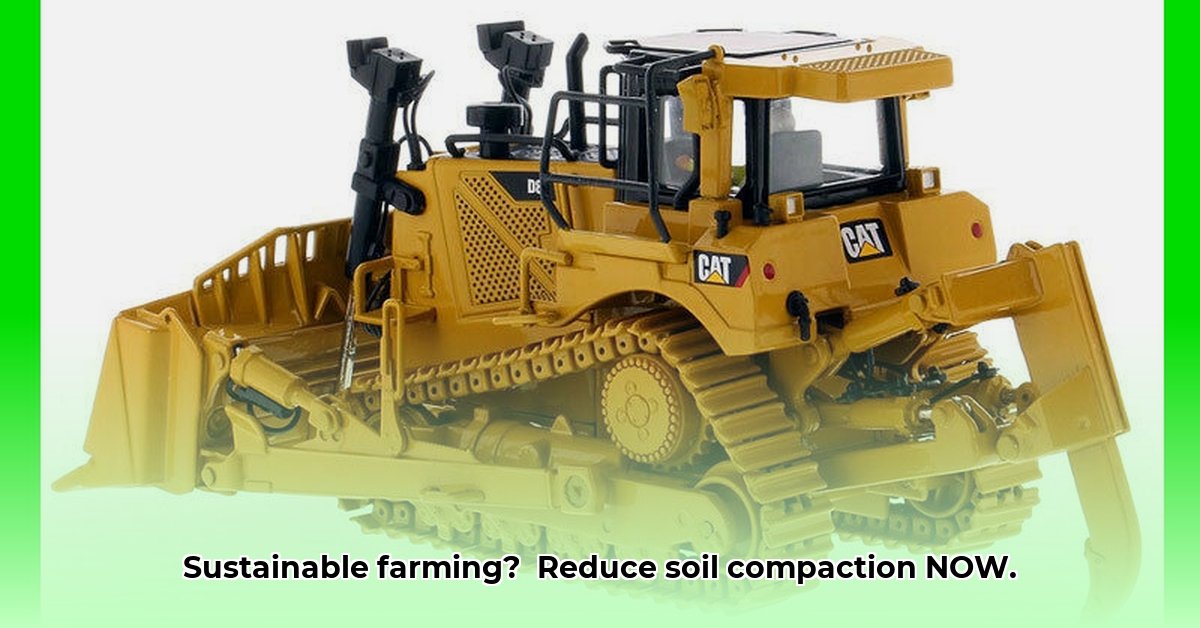
Tractor de Oruga: Minimizing Soil Compaction for Sustainable Agriculture
New Holland crawler tractors, also known as "tractor de oruga," are increasingly recognized for their contribution to sustainable agricultural practices. This article assesses their sustainability profile, focusing on fuel efficiency, soil compaction reduction, adaptable operation, and the need for further research, particularly a comprehensive lifecycle assessment (LCA). We will also explore the associated risks and regulatory implications. For more information on New Holland tractors, check out this helpful resource.
Fuel Efficiency: Optimizing Energy Use
New Holland crawler tractors, such as the D150B, incorporate hydrostatic transmissions and efficient engine designs aimed at minimizing fuel consumption. While precise quantitative data on fuel savings compared to wheeled counterparts isn't readily available in readily accessible sources, the industry generally acknowledges the superior fuel economy of these machines. Further research, including controlled field tests under varying conditions, is needed to establish definitive fuel savings figures. Isn't maximizing fuel efficiency a key goal for environmentally conscious farmers?
Reduced Soil Compaction: Protecting Soil Health
The extended track system on New Holland crawler tractors significantly reduces soil compaction compared to wheeled tractors. The larger contact area distributes weight more effectively, minimizing soil disturbance. This improved soil health translates to better water infiltration, increased root growth, and ultimately, increased crop yields. Studies comparing soil compaction levels under wheeled and crawler tractors across various soil types would be valuable in quantifying this environmental benefit. How much can reduced soil compaction increase long-term farm productivity?
Adaptable Operation: Precision Farming Capabilities
New Holland crawler tractors offer adjustable settings allowing farmers to optimize machine performance for specific tasks and field conditions. Customizing speed, steering sensitivity, and hydraulic flow contributes to enhanced fuel efficiency and reduced soil disturbance. This level of precision allows farmers to tailor their approach based on the needs of both the crop and the soil. What percentage of fuel savings could farmers realistically expect with optimized machine settings?
Limitations of the Current Assessment: A Call for Further Research
Despite the clear benefits, a comprehensive analysis of the sustainability of New Holland crawler tractors is hampered by a lack of readily accessible, quantifiable data. Specific areas requiring further research include:
- Precise fuel savings compared to conventional tractors under diverse operating conditions.
- Quantifiable measurements of soil compaction reduction in various soil types.
- A comprehensive lifecycle assessment (LCA), encompassing manufacturing, transport, operation, and end-of-life management.
Lifecycle Assessment (LCA): A Crucial Next Step
A comprehensive LCA is essential for assessing the true environmental impact of New Holland crawler tractors. This would involve analyzing the environmental burden associated with the manufacturing of components, transportation to the farm, operational fuel consumption, and eventual disposal or recycling of the machine. What specific environmental impact categories should be prioritized in a comprehensive LCA?
Actionable Recommendations for Stakeholders
The transition to sustainable agriculture requires collaborative effort. The following table outlines actionable steps for various stakeholders:
| Stakeholder | Short-Term Actions | Long-Term Actions |
|---|---|---|
| Farmers/Contractors | Maintain detailed operational logs; explore fuel-efficient practices and soil testing. | Invest in precision farming technologies; participate in data-sharing initiatives. |
| New Holland | Publicly release detailed technical specifications and operational data. | Invest in LCA studies and transparently report findings; develop sustainable manufacturing processes. |
| Governments/NGOs | Offer financial support and tax breaks for farmers adopting sustainable equipment. | Develop and enforce regulations favoring sustainable agricultural practices. |
| Researchers | Conduct comparative studies of different tractor types; focus on the environmental life-cycle impact. | Investigate the long-term effects of reduced soil compaction on overall soil health and economic viability. |
Risk Assessment and Mitigation Strategies
Potential risks associated with New Holland crawler tractors and mitigation strategies are outlined below:
| Technology/Factor | Probability | Severity | Risk Level | Mitigation Strategies |
|---|---|---|---|---|
| Hydrostatic Transmission | Low | Moderate | Low | Regular maintenance; operator training; preventative maintenance. |
| Engine Reliability | Low | High | Moderate | Preventative maintenance; close monitoring of engine performance; timely repairs. |
| Track Durability | Moderate | Moderate | Moderate | Careful operation; routine inspections; prompt addressing of wear and tear. |
| Supply Chain Issues | Moderate | High | High | Diversify suppliers; strategic inventory management. |
Regulatory Implications: Adapting to Evolving Standards
Ongoing and future regulations concerning greenhouse gas emissions, waste management, and sustainable agricultural practices will significantly influence the adoption and development of agricultural technologies like New Holland crawler tractors. Manufacturers and farmers must proactively monitor and adapt to these evolving regulatory landscapes.
Conclusion: Driving Towards Sustainability
While New Holland crawler tractors offer significant potential benefits in terms of fuel efficiency and reduced soil compaction, a comprehensive understanding of their overall sustainability requires a dedicated, transparent, and data-driven LCA. Further research and collaboration among farmers, manufacturers, researchers, and policymakers are essential to fully realize the environmental and economic advantages of these advanced agricultural machines. The future of sustainable agriculture depends on such concerted efforts.